What should I check when buying a used 5.7 Hemi engine?
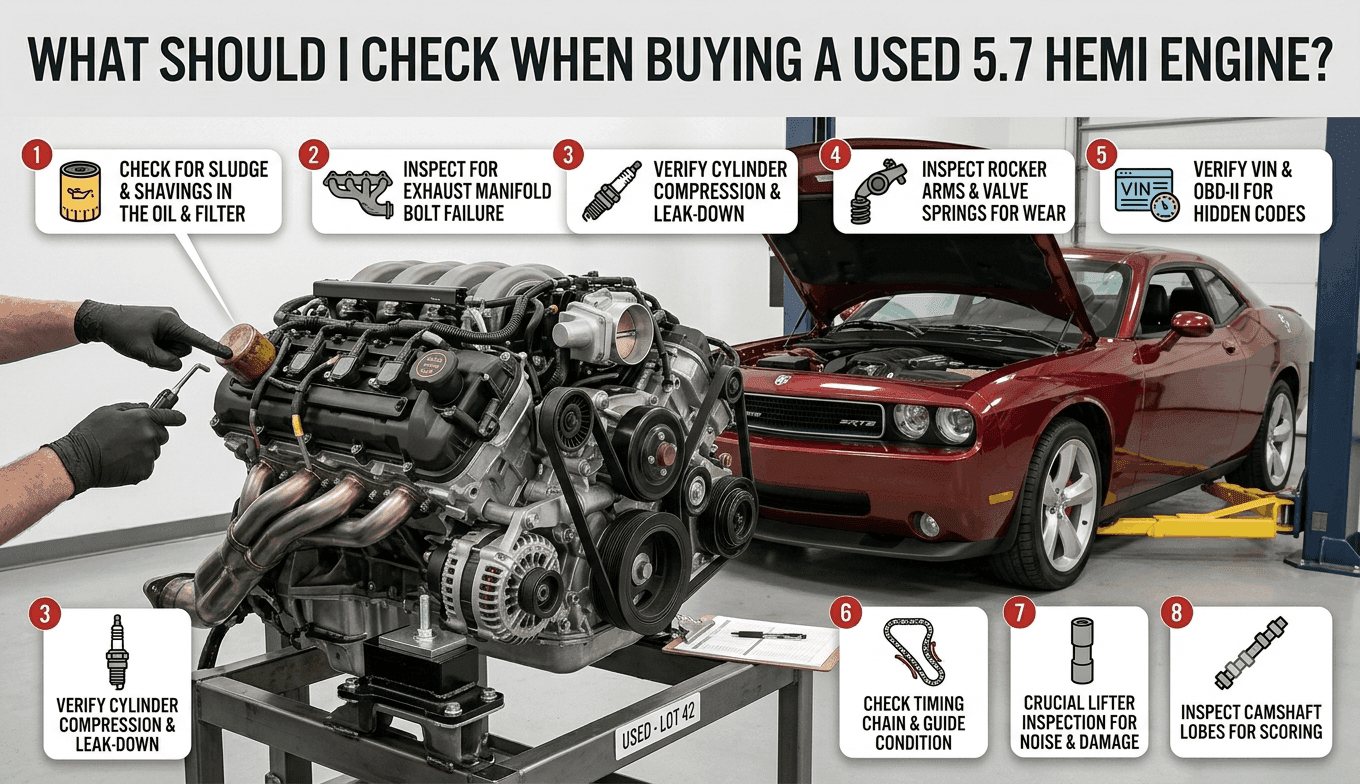
When buying a used 5.7 Hemi engine verify the MDS cylinder deactivation system lifter condition, confirm the engine generation through VIN, request compression test results across all eight cylinders, check for exhaust manifold bolt failure evidence, and confirm the cam and lifter kit status on high mileage examples before purchasing

James Watson
Engines Expert
What should I check when buying a used 5.7 Hemi engine?
When buying a used 5.7 Hemi engine verify the MDS cylinder deactivation system lifter condition, confirm the engine generation through VIN, request compression test results across all eight cylinders, check for exhaust manifold bolt failure evidence, and confirm the cam and lifter kit status on high mileage examples before purchasing
Why the Used 5.7 Hemi Engine Is One of the Most Searched RAM Engine Replacements in America
sixties-eraFew engines carry the name recognition and the loyal ownership community that the Chrysler 5.7 liter Hemi V8 has built across more than two decades of continuous production in RAM trucks. Since its introduction in the 2003 RAM 1500 as a genuine revival of the Hemi combustion chamber design that made the original sixties era engines famous, the 5.7 Hemi has powered millions of RAM 1500, RAM 2500, Dodge Durango, Jeep Grand Cherokee, and Chrysler 300 vehicles across every state in the country.
The demand for a used 5.7 Hemi engine for sale is among the strongest of any specific engine in the American used parts market, driven by the enormous population of Hemi-powered vehicles on the road and by the specific failure modes that high-mileage Hemi engines develop. Understanding exactly what drives replacement demand and exactly what to inspect before purchasing any used RAM engine is what separates buyers who end up with a reliable long-term solution from those who repeat the same expensive process six months later.
Understanding the Two Generations of the Used 5.7 Hemi Engine Before You Buy
The 5.7 Hemi engine has gone through two meaningfully different engineering generations across its production life, and knowing which generation you are buying matters significantly for both long-term reliability and fitment compatibility in your specific RAM truck.
The Eagle Generation 5.7 Hemi (2003 to 2008) carries the engine code EZB and does not include the Multi-Displacement System cylinder deactivation. This generation is broadly considered the more mechanically straightforward of the two because it has no cylinder deactivation components to fail. Compression ratios, cam profile, and head design are different from the later Apache generation, and the earlier Eagle generation uses a different throttle body mounting position and intake configuration that affects direct swapping between generations.
The Apache Generation 5.7 Hemi (2009 to present) carries the engine code EZH and introduces the Multi-Displacement System, which Chrysler calls MDS, that deactivates four of the eight cylinders during light-load highway cruising to improve fuel economy. This generation also introduced variable valve timing beginning in 2013 on certain applications and updated connecting rod and piston designs that improved oil consumption characteristics compared to some early examples.
The most critical fitment rule when sourcing any used 5.7 Hemi engine is to match the generation to your specific vehicle's original engine configuration through VIN verification. Installing an Eagle generation engine into a 2010 RAM 1500 that originally came with an Apache generation engine creates wiring harness incompatibilities, PCM calibration mismatches, and MDS solenoid signal conflicts that prevent the truck from operating correctly without additional modification.
The MDS Cylinder Deactivation Problem That Drives Most Used 5.7 Hemi Engine Demand
If there is one technical topic that every buyer of a used 5.7 Hemi engine must understand before making any purchase, it is the Multi Displacement System lifter failure that represents the single largest driver of 5.7 Hemi engine replacement demand in the American market.
The MDS system uses specialized hydraulic lifters on four of the eight cylinders that collapse inward when commanded by the engine control module under light-throttle cruise conditions, effectively shutting those four cylinders off and reducing fuel consumption. The design works well when new, but at higher mileage thresholds, commonly appearing between 80,000 and 140,000 miles, the MDS lifters develop internal wear that causes them to collapse unexpectedly without command from the PCM.
When an MDS lifter collapses without command, the cylinder it controls stops firing correctly. The result is a noticeable engine tick or knock, a check engine light with misfire codes on the affected cylinders, rough idle, and in severe cases the lifter or its retaining components can break apart and send debris through the oiling system, damaging the camshaft lobes, other lifters, and in the worst cases requiring complete engine replacement rather than just a cam and lifter replacement.
This is exactly why buyers sourcing a used 5.7 Hemi engine must specifically ask about MDS lifter condition and insist on documentation that the lifters and camshaft lobes were inspected on the unit being purchased. A reputable supplier should be able to confirm whether the unit shows evidence of lifter tick, abnormal cam lobe wear, or oil contamination from lifter debris before the engine is offered for sale.
Complete Inspection Checklist for a Used RAM 5.7 Hemi Engine Before Purchase
Every buyer of a used RAM engine, particularly a used 5.7 Hemi engine, should verify the following points before any money changes hands. This checklist protects buyers from the most commonly inherited problems in the used Hemi market.
Compression test results across all eight cylinders are the starting point for any used 5.7 Hemi evaluation. Even compression across all cylinders within the manufacturer specified range confirms that the rings, valves, and head gaskets are in acceptable condition. Any cylinder showing significantly lower compression than the others warrants further investigation before purchase.
MDS lifter and camshaft lobe inspection documentation is the most Hemi specific requirement on this list. Ask specifically whether the cam lobes were visually inspected and whether any evidence of MDS lifter failure was observed during the inspection process.
Exhaust manifold bolt condition is a commonly overlooked issue on the 5.7 Hemi because the cast iron exhaust manifolds expand and contract differently from the aluminum cylinder heads through heat cycles, causing the manifold bolts to fatigue and snap over time. Broken exhaust manifold bolts create an exhaust leak tick that some buyers mistake for a valve train issue, and they are expensive to extract and repair if the break occurs below the surface.
Oil analysis or fluid condition review confirms whether the engine has been maintained with regular oil changes and whether any debris from a developing internal failure is suspended in the oil. Dark heavily contaminated oil with a metallic smell indicates neglect or an internal failure in progress.
Engine mileage documentation through the donor vehicle's history is the final essential verification step. A used 5.7 Hemi from a 60,000 mile donor vehicle represents a fundamentally different reliability proposition than the same engine pulled from a 140,000 mile truck, even if both pass a basic compression test at the time of sale.
Used RAM Engine and Used 5.7 Hemi Pricing by Region
Understanding realistic pricing for a used RAM engine across different US markets helps buyers evaluate whether a specific offer represents genuine value or a red flag worth investigating further before committing.
Texas sees the highest volume of used 5.7 Hemi engine transactions of any US state, driven by the enormous RAM truck population across the state's ranching, energy, and construction industries. Higher supply in Texas creates more competitive pricing, with clean mid mileage Apache generation units commonly available in the 1,800 to 3,200 dollar range depending on mileage and inspection status.
California has strong used Hemi demand from the construction and outdoor recreation markets but stricter sourcing requirements because California's CARB emissions compliance rules affect which engine years can be legally installed in California registered vehicles. California buyers should verify that any used 5.7 Hemi being considered matches the California emissions specification of the original engine in their specific vehicle.
Michigan and the broader Midwest market sees consistent used 5.7 Hemi demand from agricultural and work truck applications. Cold climate examples often show better internal condition than equivalent Southern market engines because lower average temperatures reduce long term oil oxidation rates, though cold start wear can be a factor in engines that were not properly warmed before demanding operation.
Florida buyers should specifically ask about storage history on any used Hemi being sourced from a Florida donor vehicle because Florida's humidity and heat combination accelerates external corrosion on engine components and can affect gasket and seal condition even in engines with reasonable mileage.
What Makes a Reliable Used RAM Engine Supplier Worth Trusting
Not every seller of a used 5.7 Hemi engine applies the same standards to sourcing, inspection, and documentation, and the difference between a reliable supplier and an unreliable one is the difference between a used RAM engine that lasts another 100,000 miles and one that fails within six months of installation.
A trustworthy used RAM engine supplier provides documented compression test results specific to the unit being sold, not generic language about inspection standards. They can describe their MDS lifter inspection process in specific terms rather than stating only that engines are tested before sale. They confirm mileage through donor vehicle documentation rather than estimating based on physical appearance. They offer warranty coverage on the unit with clear terms that include accessible digital warranty records using the buyer's name, phone number, or order ID rather than a physical card that can be lost.
Need the Right Part?
Get a free, no-obligation quote from AutoKing specialists.
Frequently Asked Questions
MDS lifter failure is the most commonly reported used 5.7 Hemi problem, particularly on Apache generation engines between 80,000 and 140,000 miles. Exhaust manifold bolt failure is the second most common issue and is often misdiagnosed as a valve train noise.
A properly inspected used 5.7 Hemi with documented low mileage, clean oil history, and confirmed MDS lifter condition can realistically deliver 100,000 to 150,000 additional miles of reliable service when correctly installed and maintained.
Many RAM owners pair a used 5.7 Hemi installation with an MDS delete procedure that replaces the cylinder deactivation lifters with standard solid units and disables the MDS function through a PCM tune. This eliminates the primary failure mode of the engine going forward and is widely considered a worthwhile modification for buyers who want maximum long term reliability from their used Hemi investment.
Still have questions?
Our specialists are ready to help — no bots, no scripts.